
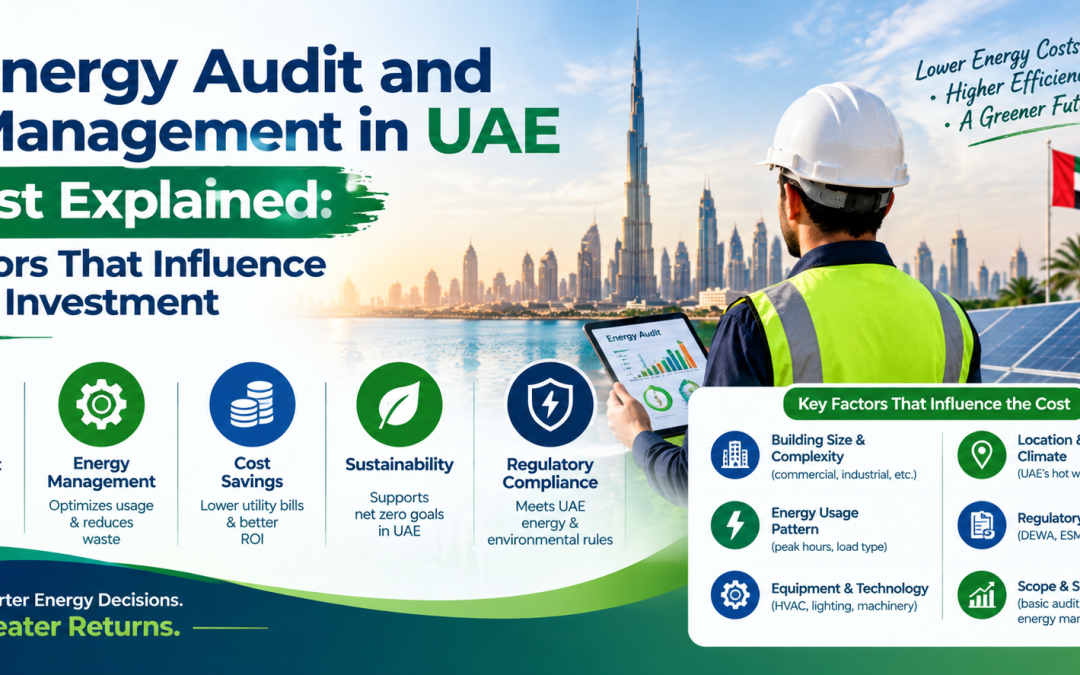
Energy costs continue to be one of the largest operating expenses for businesses. In energy-intensive industries like healthcare, hospitality, logistics, and commercial buildings, the cost is higher. An energy-efficient business is a requirement for the government and private investors. This is where Energy Audit and Management in UAE monitor, manage, improve, and optimize energy performance while reducing costs and environmental impact.
The cost of certification widely depends on several organizational factors. The cost is determined by the size of the company, the number of locations, and the company’s established status. The existing management systems, energy uses, and certification scope are also responsible for the same.
Understanding ISO 50001 Certification Costs
Investment for ISO 50001 certification typically includes several components rather than a single fee. Different kinds of assessment, preparation, and training contribute to the overall certification cost:
- Initial gap assessment
- Energy review and baseline development
- ISO 50001 Documentation
- Employee awareness and training
- System implementation
- Internal audits
- Management review
- Certification audit
- Annual surveillance audits
- Recertification after three years
Factors That Influence ISO 50001 Certification Cost
One of the biggest cost drivers is the size of the organization. Larger organizations require:
- More employees to train
- More departments to evaluate
- More operational processes
- Larger documentation requirements
- Extended audit durations
Businesses operating from multiple locations typically incur higher certification costs.
Examples include:
- Manufacturing groups
- Retail chains
- Logistics companies
- Universities
- Hospital networks
- Construction firms
Additional facilities usually require:
- Site visits
- Additional sampling
- Extended audit time
- More documentation
Certification scope defines which activities, products, services, or facilities are included within the Energy Management System.
A broader scope involving:
- Manufacturing operations
- Warehousing
- Corporate offices
- Distribution centers
Organizations with simple administrative operations typically require less ENMS Audit effort than companies operating complex industrial processes.
- Steel manufacturing
- Cement production
- Chemical processing
- Oil and gas
- Food manufacturing
- Pharmaceuticals
Organizations already certified to standards such as:
- ISO 9001
- ISO 14001
- ISO 45001
Some organizations already monitor:
- Electricity
- Gas
- Steam
- Water
- Fuel consumption
Certification bodies charge fees based on:
- Audit duration
- Number of auditors
- Travel requirements
- Industry complexity
- Number of locations
- Certification scope
Energy Audit and Management in UAE is not a one-time activity.
Following successful certification:
- Annual surveillance audits verify continued compliance.
- A recertification audit is conducted every three years to renew the certification.
Organizations should include these recurring costs in their long-term planning.
Hidden Costs Organizations Often Overlook
An organization just doesn’t pay only the certification fees, but they also pay the installation charges for energy meters. Other factors that include are upgrading the monitoring equipment, calibration, and maintenance improvements. Even the process for optimization of the project and the start time for implementation of the project involve charges. Although these costs may increase the initial budget, they often deliver significant operational savings over time.
Many organizations focus only on certification costs without considering the financial benefits.
ISO 50001 helps organizations reduce:
- Electricity consumption
- Fuel usage
- Heating and cooling costs
- Production inefficiencies
- Equipment downtime
- Wasteful energy practices
Over time, these improvements can generate savings that exceed the initial certification investment.
Business Benefits Beyond Cost Savings
The value of ISO 50001 extends beyond reducing utility bills.
Organizations often experience:
Improved Operational Efficiency
Energy monitoring helps identify inefficient processes, enabling better resource utilization and streamlined operations.
Stronger Environmental Performance
Reducing energy consumption also lowers greenhouse gas emissions, supporting sustainability goals and environmental commitments.
Better Regulatory Compliance
ISO 50001 helps organizations demonstrate compliance with applicable energy regulations and prepares them for evolving reporting requirements.
Enhanced Corporate Reputation
Customers, investors, and business partners increasingly prefer organizations that demonstrate responsible energy management.
Certification strengthens credibility and supports long-term business relationships.
Competitive Advantage
Many procurement processes and tenders now evaluate suppliers based on sustainability and energy performance.
ISO 50001 certification can strengthen an organization’s competitive position when bidding for contracts.
Tips to Optimize ISO 50001 Certification Costs
Organizations can manage costs effectively by:
- Defining a realistic certification scope.
- Integrating ISO 50001 with existing management systems.
- Conducting a gap assessment before implementation.
- Training internal employees to support ongoing compliance.
- Selecting experienced consultants when needed.
- Choosing an accredited certification body with relevant industry expertise.
- Establishing energy monitoring systems early in the project.
- Maintaining ISO 50001 Documentation consistently to reduce audit preparation effort.
These practices help minimize delays, avoid corrective actions, and improve certification success.
Is ISO 50001 Certification Worth the Investment?
For organizations with significant energy consumption, the answer is often yes.
ISO 50001 is not simply a compliance exercise. It provides a systematic approach to improving energy performance, controlling operational costs, and strengthening environmental responsibility.
Organizations that actively use the standard frequently realize benefits such as:
- Lower energy expenses
- Improved process efficiency
- Reduced carbon emissions
- Better operational control
- Increased stakeholder confidence
- Stronger market competitiveness
When viewed over the lifecycle of the Energy Management System, the long-term financial and strategic benefits can outweigh the initial certification costs.
Conclusion
The cost of Energy Audit and Management in UAE depends on several variables, including organizational size, operational complexity, number of locations, certification scope, training requirements, consultancy support, and certification body fees. Because every organization has unique energy profiles and business objectives, there is no universal price.
Ready to Get ISO Certified?
Get free assessment faster without the usual headaches. Our platform automates the tedious paperwork and gives you clear, step-by-step guidance from start to finish.