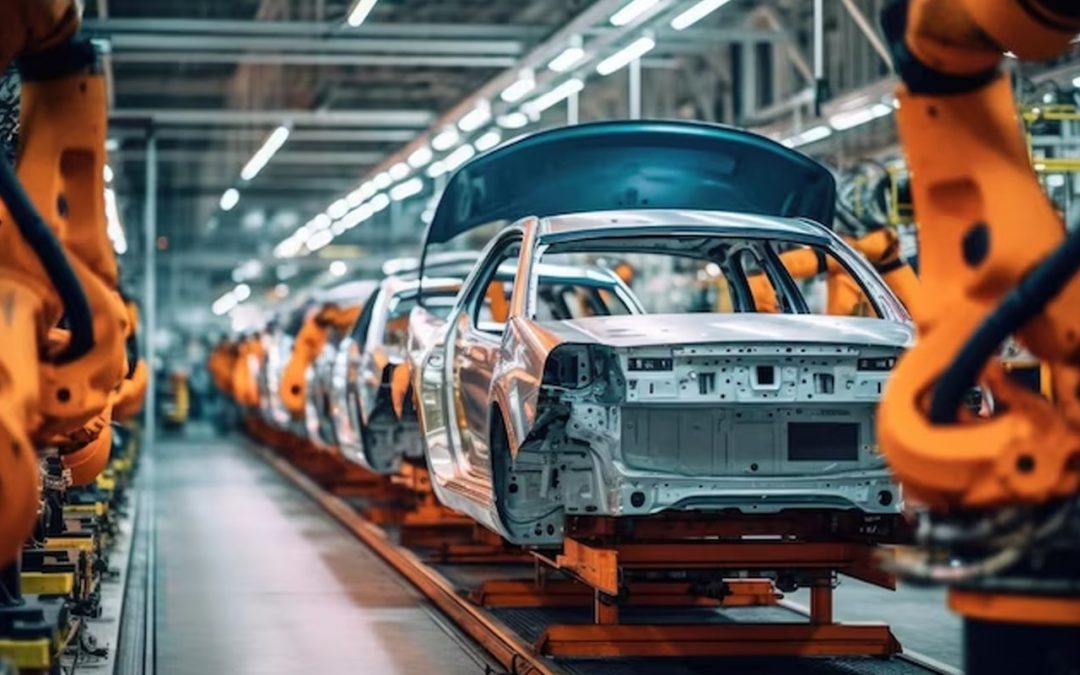
In the consistently developing scene of car production, remaining ahead requires an essential mix of industry guidelines and state-of-the-art advances. One such strong coordinated effort is between the IATF Certification and Industry 4.0 – a synergy that not only satisfies the needs of the cutting-edge car industry but drives it into another time of effectiveness and development.
The auto business is going through a groundbreaking movement, driven by the development of Industry 4.0, a transformation portrayed by intelligent automation, information-driven navigation, and interconnected systems.
Inside this scene, IATF 16949, the global norm for quality administration in the car store network, assumes a significant part in guaranteeing consistent improvement and deformity counteraction. In any case, how do these two various elements synergize?
IATF 16949: The Foundation of Quality
IATF 16949 Certification lays out an extensive structure for quality administration frameworks inside the car business. It underlines a few key standards:
- Persistent improvement: This central way of thinking drives organizations to assess and upgrade their cycles, prompting upgraded productivity and reducing waste continually.
- Defect prevention: The attention is on recognizing potential issues almost immediately and carrying out protection measures to keep away from expensive blunders and deferrals.
- Consumer satisfaction: Meeting and surpassing client assumptions is vital, requiring solid correspondence and responsiveness all through the inventory network.
These standards make a strong starting point for quality management, which is fundamental in the speedy and complex environment of auto production.
Industry 4.0: The Catalyst for Transformation:
Industry 4.0 presents a set-up of inventive innovations that can fundamentally improve the way IATF 16949 is implemented:
- Big Data & Analytics: Overwhelmingly of information created by sensors and associated machines, organizations can acquire further bits of knowledge into their tasks, distinguish possible issues, and pursue data-driven choices for development.
- Artificial intelligence (AI) and Machine Learning (ML): AI and ML can be utilized to mechanize undertakings, further develop quality control processes, and foresee possible issues before they happen, further lining up with IATF 16949 Requirements on deformity anticipation.
- The Internet of Things (IoT): Organized sensors and devices can gather constant information on hardware wellbeing, production cycles, and product quality, empowering proactive support and consistent checking, lined up with IATF’s accentuation on persistent improvement.
The Confluence of IATF 16949 and Industry 4.0:
- Quality in the Digital Age:
IATF 16949, as the worldwide standard for quality management in the auto business, accentuates the significance of steady and predominant product quality. With Industry 4.0 innovations, for example, high-level sensors and constant checking, manufacturers can accomplish phenomenal degrees of quality control.
The reconciliation of advanced arrangements guarantees that each step of the assembling system is firmly observed, taking into consideration quick remedial activities when deviations happen.
- Data-Driven Decision-Making:
Industry 4.0 blossoms with data, and the International Automotive Task Force adjusts flawlessly with this rule. The confirmation puts major areas of strength for an on-data investigation for consistent improvement.
Brilliant assembling systems empower continuous information assortment, analysis, and translation, engaging producers with experiences to settle on informed choices that upgrade quality and effectiveness.
- Supply Chain Visibility and Traceability:
IATF 16949 puts huge significance on recognizability and control all through the store network. Industry 4.0 innovations, for example, blockchain and RFID, upgrade transparency and detectability, guaranteeing that every part’s excursion from the provider to the eventual outcome is recorded and checked.
This fulfills certificate necessities as well as adds to a stronger and more responsive store network.
- Predictive Maintenance and Downtime Reduction:
One of the mainstays of Industry 4.0 is prescient support, which is firmly lined up with IATF 16949’s accentuation on preventive activity. Smart sensors and prescient analysis empower producers to expect hardware disappointments, decreasing free time and forestalling likely quality issues.
This proactive methodology is following the standards of IATF Certification, advancing reliability and compliance.
Integrating Well: Challenges and How to Overcome Them
Although IATF 16949 and Industry 4.0 compatibility provide great advantages, the IATF 16949 and Industry 4.0 integration can be somewhat tricky.
Challenge #1: High Adoption Costs
Implementing technologies for Industry 4.0 takes a considerable initial investment. Yet the costs are outweighed by the long-term benefits of efficiency, reduced waste, and improved quality.
Proposed Solution: Manufacturers can prioritize and implement AI gradually, by first focusing on mission-critical aspects such as defect detection and predictive maintenance, ensuring costs remain manageable.
Challenge #2: Training the Workforce
Traditional employees are required to learn several new skills to operate and manage advanced technologies with their usage requirements as per IATF 16949.
Proposed Solution: Thorough training both in the field and on the principles and practices of quality management supports a smooth transition.
Challenge #3: Data Security
As more systems become interconnected, cyber risks grow, and sensitive data and operations could be compromised.
Proposed Solution: It is important to have strong cybersecurity measures in place such as encrypted communications and regular audits to protect Industry 4.0 applications.
Conclusion:
All in all, the conversion of IATF Certification and Industry 4.0 synergizes once again for auto production. By embracing digitalization and savvy production, organizations line up with certification requirements as well as position themselves at the cutting edge of development, guaranteeing a strong and cutthroat future in the quickly progressing automobile industry.
The integration of these frameworks empowers manufacturers to pursue operational excellence, respond to changing market dynamics, and play a significant role in creating a sustainable future for the automotive industry. Fostering this synergy allows companies to compete in a fast-paced environment whilst continually providing exceptional products that align with customer and international standards.
Accepting this convergence is not only a strategic decision but also an essential requirement for sustainable growth in the automotive market.